S.M.U.T. – The Band That Never Was

In the pantheon of Swedish music, few names evoke as much neon-soaked notoriety as S.M.U.T. Emerging from the late 90s underground, this “cyberglam” outfit became a lightning rod for moral panic, a champion for the disenfranchised, and ultimately, the subject of one of rock’s greatest vanishing acts.
1998: The Debut and the Ban
S.M.U.T. crashed into the mainstream in 1998 with their debut album, Lovespuds. While fans embraced their high-octane blend of industrial synths and glam-rock swagger, the Swedish establishment was less than amused.

- The Controversy: IFPI Sweden leveled heavy criticism against the band for “needlessly explicit lyrics.”
- The Fallout: Three tracks were slapped with immediate radio bans.
- The Result: In a classic case of the “Streisand Effect,” the infamy backfired on the censors, sending sales skyrocketing and fueling demand for a continental tour.
1999: European Mayhem and the ‘Wurstkrieg’
The band’s 1999 European tour was a whirlwind of sold-out shows and chaotic energy. However, their reputation for volatility was cemented during a riotous stop in Germany.
The infamous “Wurstkrieg” incident saw an over-excited crowd cause extensive structural damage to a venue. Though the band demonstrated a rare moment of professional accountability—offering to pay for repairs and play a free makeup show—the venue owners, perhaps fearing total demolition, flatly declined. As critics began calling for the band to be disbanded, S.M.U.T. responded with characteristic defiance, promising a new album that would be even more provocative.
2000: Phallic Blitzkrieg
True to their word, the band released their sophomore effort, Phallic Blitzkrieg, in 2000. It was a tactical strike against their detractors.

The album was immediately banned in Germany, and the subsequent tour was marked by a bizarre contrast: while the shows themselves were largely orderly, the venues were often surrounded by blockades of church groups and concerned parents. The band remained barred from German soil, further mythologizing them to their fans behind the “censorship curtain.”
“We are no strangers to controversy and the album is a big middle finger to the prudes and puritans who are afraid of having a little fun,” the band stated. “It’s not our fault they’re fucking boring!”
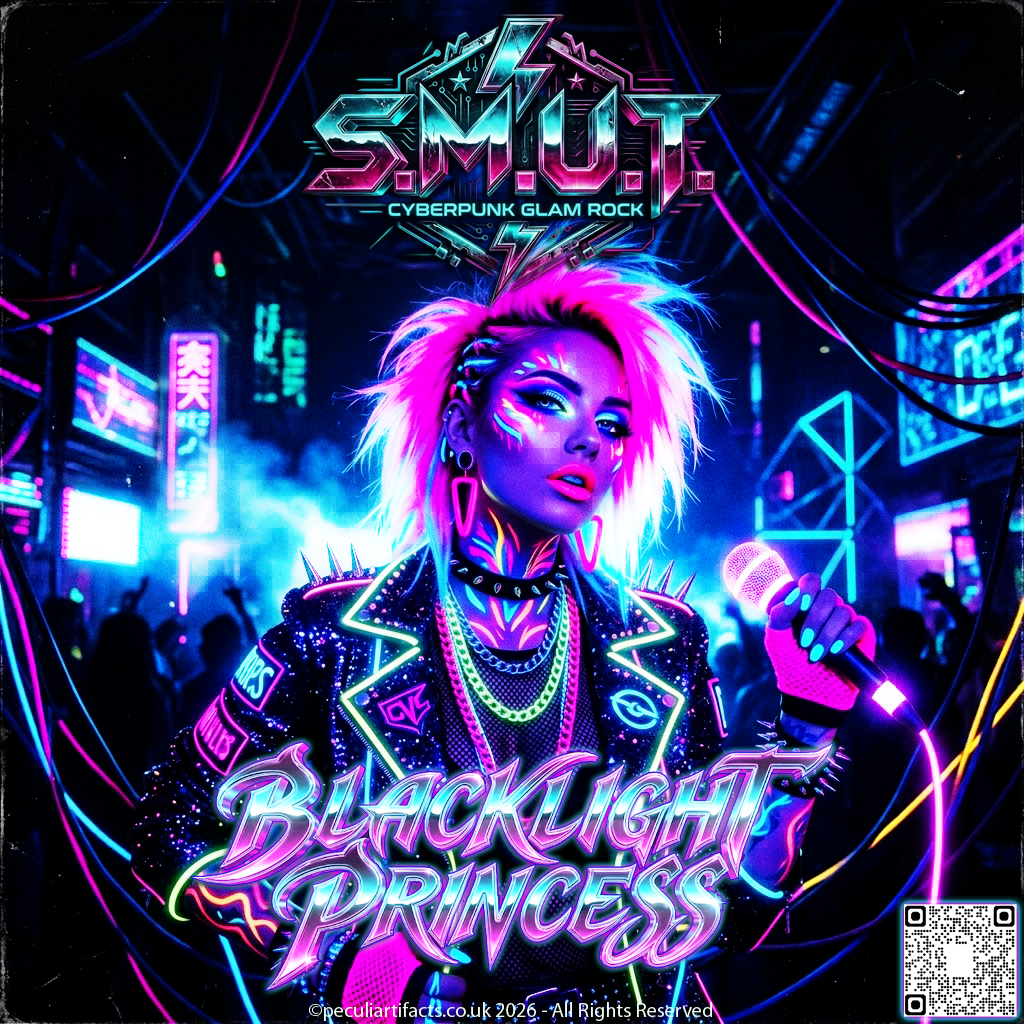
2002: The Final Act and the Great Mystery
After a period of uncharacteristic silence, S.M.U.T. returned in 2002 with Blacklight Princess. The album signaled a shift in tone; while it lacked the raw, chart-topping vitriol of their earlier work, it maintained a loyal enough following to warrant another tour.
That tour would be their last. The journey was cut short by a tragic road traffic accident in which all members were presumed dead. However, the tragedy was quickly eclipsed by mystery.
- The Crash: Emergency responders found a scene of total devastation.
- The Enigma: Conspiracy forums immediately lit up with reports that no bodies were recovered from the wreckage or the surrounding area.
To this day, the fate of S.M.U.T. remains a cornerstone of cyberglam lore. Whether they perished in the wreckage or used the chaos to stage the ultimate disappearing act, their legacy as Sweden’s most unapologetic provocateurs remains intact.